Storage duration & economics
Conventional storage lasts 2–6 h and still needs grid or diesel backup — high cost, unmet carbon goals.
XCITY ENERGY · FGS · FIRM GREEN SUPPLY SYSTEM
FGS delivers firm, always-on green power to mines, data centers and heavy industry — a modular, grid-forming energy platform built on long-duration CO₂ dry-ice storage.
CO₂ dry-ice storage — inert, non-flammable, 30–50 yr design life.
>20h
Long-duration discharge capacity
≤10ms
Primary frequency / voltage response
$0.04/kWh
Levelized all-in cost of power
30–50yr
System design life
The challenge
Training, inference and fine-tuning drive large, tidal power swings. Continuous stability, instantaneous power support and multi-source time-matching all sit beyond the reach of conventional grids, diesel and short-duration storage.
Conventional storage lasts 2–6 h and still needs grid or diesel backup — high cost, unmet carbon goals.
Legacy grids struggle with the sharp power swings of AI clusters, causing resource mismatch and heavy capex.
Solar and wind variability can't meet always-on demand; abundant clean power is curtailed and wasted.
Energy build-out is a key bottleneck, yet AI growth imposes ever-tighter deployment timelines.
Next-gen infrastructure must optimize continuously across balance, cost and carbon.
Without maximizing renewables, the total cost of power for an AI cluster stays stubbornly high.
Market driver
Under the EU's Carbon Border Adjustment Mechanism, verified renewable supply is no longer optional. Carbon tariffs erode price competitiveness, while green procurement brings certification, reliability and cost challenges of its own.
The product
Built around long-duration CO₂ dry-ice storage, FGS orchestrates generation, storage, network and load through multi-energy complementarity and intelligent control — delivering efficient, low-carbon, always-on power in a closed-loop green energy ecosystem.
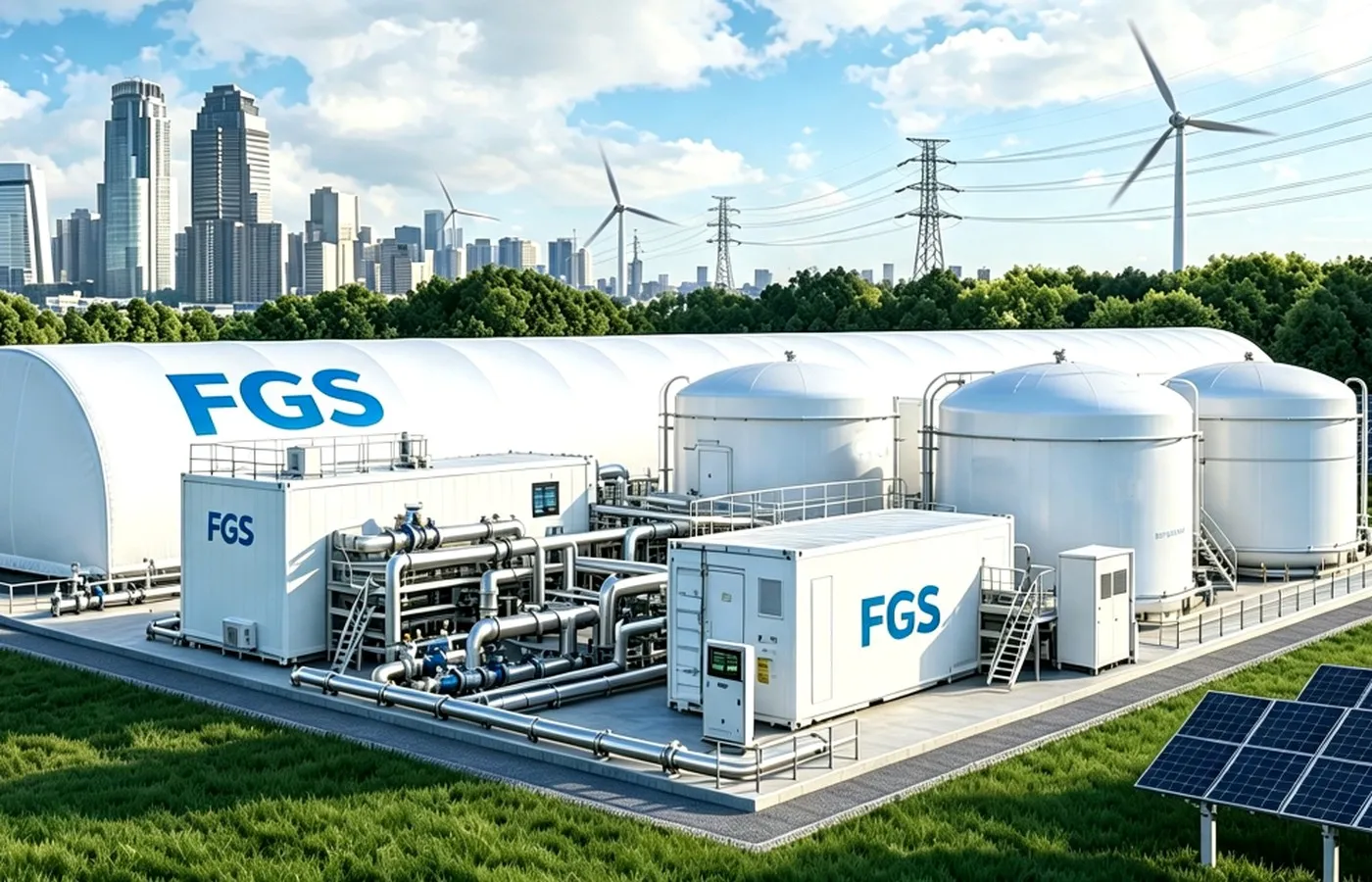
On-demand combination of generation, storage, backup, control and cloud platform.
Unified architecture and standard interfaces; capacity and specs configured to need.
Off-grid, weak-grid, dual-mode or brownfield retrofit — chosen to your standards.
Full-lifecycle service from design and sizing to delivery and operational optimization.
Next-gen storage
CO₂ dry-ice storage with a small high-performance battery buffer for large-capacity, long-duration output.
Multi-source input
Integrates solar, wind, grid, diesel and other storage as one clean supply base — 10–35 kV and 400 V AC intake, built for unstable renewable output.
Smart energy brain
Forecasting, multi-energy dispatch and full carbon-footprint accounting in one digital control layer.
Energy security
Full-domain online monitoring, multi-level interlock protection, standardized operations and dedicated emergency response plans contain system risk end to end.
Load management
Coordinates flexible loads and taps waste heat and cooling to maximize overall energy efficiency.
FGS Store
Shift energy across hours, overnight and across days — cutting reliance on stacked short-duration batteries and maximizing renewable use.
>20 h
Long-duration capacity
≤10 ms
Primary freq / voltage response
< $0.04
Levelized cost per kWh
< 60 s
Black-start voltage rebuild
< 3%
Step-up harmonic distortion
Grid-forming
Inertia & damping support
*Figures from source technical data; final values per purchased model, configuration list and acceptance criteria.
FGS Control · FGS LoadM
A closed five-stage control loop keeps the system balanced in real time, following a clear order of priorities.
Weather, generation and load forecasting
Day-ahead / intraday plans and storage strategy
Real-time source–storage–grid–load coordination
Fault detection, switching and recovery
Alerts, reporting and asset management
Control principle
An advanced EMS grades and manages compute-base, rigid inference and flexible training / fine-tuning loads — dynamically shifting off-line compute to off-peak windows aligned with renewable output, absorbing clean power and cutting peak cost.
Time-series wind & solar generation
Buffers peaks and smooths troughs
Grades and schedules every load
Rigid inference vs. flexible training
Deployment
The same architecture and interfaces adapt to site conditions — from no grid at all to an existing diesel or PV-storage plant.
No grid coverage
Renewables + long-duration storage + backup, with black-start capability.
Frequent curtailment or fluctuation
Peak shaving, fault ride-through and guaranteed supply for critical loads.
Grid + islanding switchover
Economical everyday operation; switches to island mode on fault.
Existing diesel or PV-storage
Retain usable assets; add FGS Store and FGS Control.
Product family
Four power classes share one architecture, one set of interfaces and one control strategy.
5–10 MW
Pilot site / single production unit
Entry model · rapid deployment
10–50 MW
Mid-size mine / data center
Core model · standard delivery
50–100 MW
Large mine / industrial park
Flagship · zoned supply
100 MW+
Mining cluster / mega campus
Custom · multi-site coordination
Each power model offers selectable storage-duration packs — covering intraday balancing, overnight supply and multi-day assurance.
Product advantage
Zero lifecycle emissions and a levelized cost that undercuts conventional storage — without trading away safety.
Zero lifecycle emissions — sidestepping carbon-tariff risk entirely.
0
Operational carbon
24/7
Stable power output
With ample regional wind and solar, the architecture delivers 24/7 net-zero power — fully aligned with EU CBAM, removing cross-border cost and policy barriers.
Levelized cost as low as $0.042/kWh, with O&M at one-third of lithium storage.
$0.04
All-in cost / kWh
1/3
O&M vs. lithium
Highly competitive 30-year lifecycle cost and long service life thin out capex further — shorter payback and a clear economic edge over conventional storage.
Chemically stable, non-toxic, non-flammable CO₂ eliminates combustion and explosion risk. A 30–50 year design life stays safe and stable even in extreme heat or cold.
Beyond single-purpose storage: simultaneous power, heat and cooling. Serves industrial heat and data-center cooling directly, lifting overall energy value and creating multiple revenue streams.
Custom modular fabrication replaces traditional construction — base deployment in as little as three months, dramatically compressing build timelines.
Use cases
Five core markets where power is the binding constraint on growth, cost and carbon.
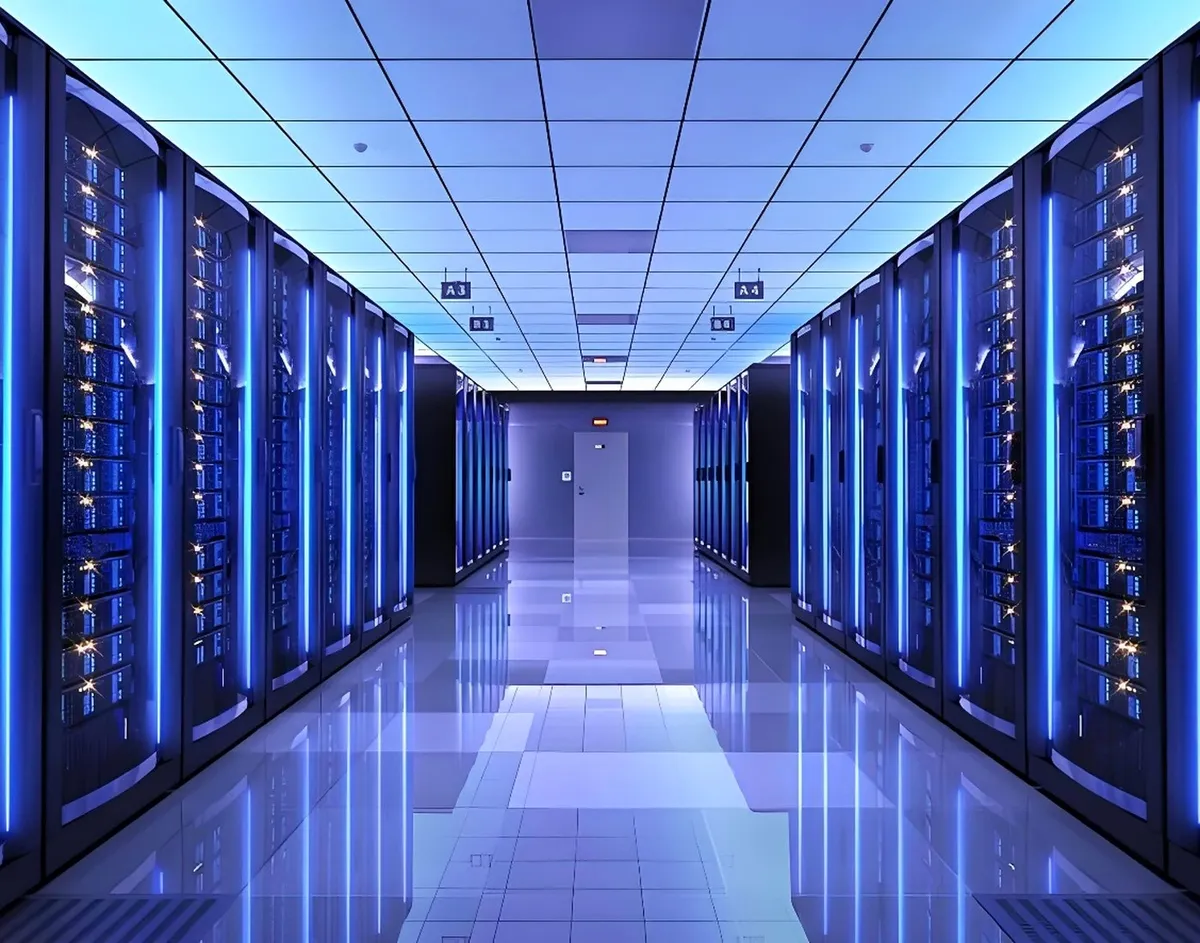
Key operational pain points
Power is the largest rigid operating cost; legacy solutions can't reach zero carbon.
Uptime Tier IV means any interruption risks major loss.
Dense compute generates intense heat; conventional cooling is energy-hungry.
Solution — core value
Multi-redundant supply, 24/7, no outage risk.
Cogen waste-heat recovery cuts cooling energy.
100% green power lifts ESG rating.
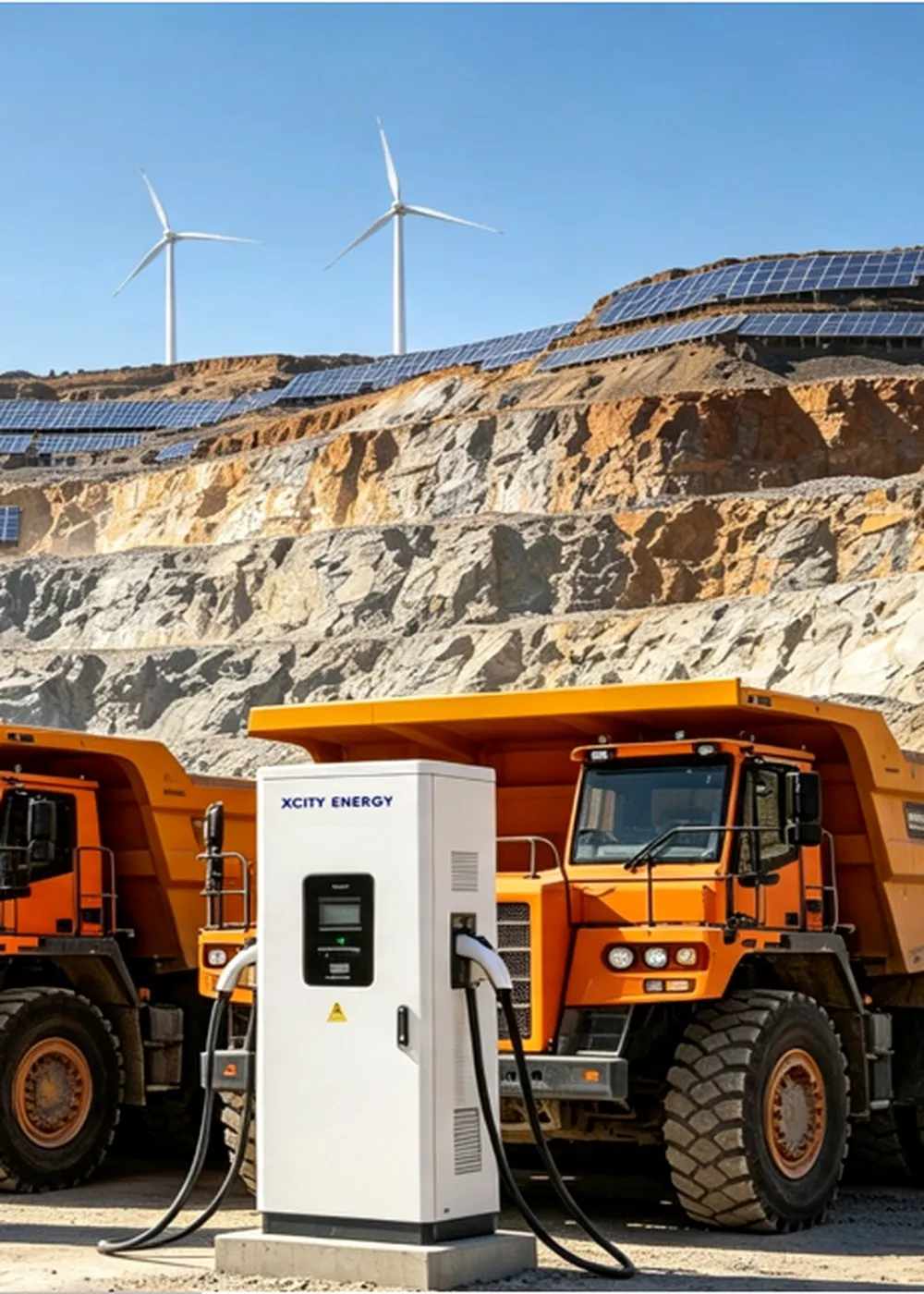
Key operational pain points
Energy is a persistently high share of operating cost.
Poor coverage; diesel gensets fail often and are hard to maintain.
Tightening carbon-neutrality policy raises tariff and rating risk.
Solution — core value
Slash carbon and diesel use; lift ESG ratings.
Cut cost per kWh by 50%+, expanding margin.
From passive consumer to active energy producer.
Key operational pain points
Precision manufacturing is sensitive to voltage/frequency; dips scrap product.
CBAM exposure squeezes export margins; legacy supply is non-compliant.
Volatile tariffs erode competitiveness without optimization.
Solution — core value
Solar + storage + microgrid keeps lines running.
100% green self-use removes carbon footprint.
Peak–valley arbitrage and self-use cut energy spend.
Key operational pain points
Distributed microgrids must ride through wide-area grid damage.
Electrochemical storage can't sustain critical community loads.
Backup gensets mean fuel reliance, pollution and high cost.
Solution — core value
CO₂ storage carries no safety risk — sited close to homes.
Compatible with many sources when the main grid is down.
Grid-forming storage can feed power back to stabilize the grid.
Key operational pain points
Today's long-duration options demand specific geology or carry environmental drawbacks.
Those limits stall large-scale deployment of long-duration capacity.
Vast, low-cost wind and solar is curtailed and can't develop as a system.
Solution — core value
First to enable cross-day and cross-season storage for effective energy shifting.
Capacity scales with CO₂ dry-ice storage — far below lithium iron phosphate.
Supplies heat, cooling and CO₂ to neighboring industries for maximum reuse.
Commercial clarity
What ships as standard, what is optional and what is delivered as service — defined before the quote.
FGS Store, FGS Control, system integration and core control strategy.
FGS Generate, FGS Secure, step-up, distribution and charging facilities.
Sizing, delivery management, commissioning, training, maintenance and optimization.
Clarify peak load, critical load, allowable interruption, expansion plan and green-power ratio.
Choose off-grid or dual-mode based on solar/wind, grid, diesel, site and environment.
Set FGS power model, storage-duration pack, backup capacity, control functions and expansion interfaces.
Deliverable: model + module list + performance specs + commercial case + delivery boundary + implementation plan
Delivery
From data checklist to long-term optimization — the same process on every site.
Data checklist, site diagnosis, supply level and preliminary model.
Architecture, single-line diagram, module list, specs and formal quote.
Construction drawings, procurement pack, grid/protection design, plan.
Installation, joint commissioning, testing, training and handover.
Remote monitoring, strategy tuning, preventive maintenance, upgrades.
Send us your peak load, critical load and site conditions. We come back with a model, a module list, performance specs and a commercial case.